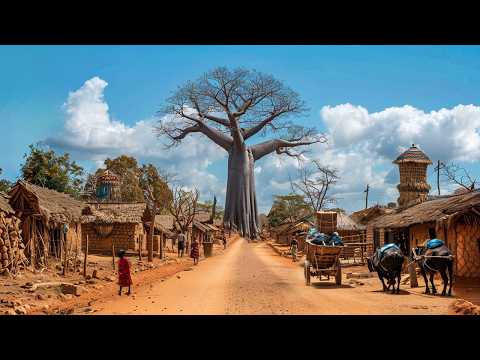
Madagascar, the world’s fourth-largest island, stands as one of Earth’s most extraordinary natural sanctuaries—a place where time seems to have slowed, and life has evolved in isolation for millions of years. Often called the last untouched wilderness, this remote island off Africa’s southeastern coast offers a rare glimpse into nature’s imagination at its wildest and most diverse.
Separated from the African mainland around 88 million years ago, Madagascar became a living laboratory of evolution. Nearly 90% of its wildlife is found nowhere else on the planet. Walking through its dense rainforests, you might witness lemurs leaping gracefully from branch to branch, chameleons shifting colors in a silent dance, and rare frogs cloaked in patterns that mimic the forest floor. Each species seems like a character in a story written only on this isolated island.
Madagascar’s landscapes are just as unique as its creatures. The towering limestone formations of the Tsingy de Bemaraha look like ancient stone forests, sharp and mysterious. In contrast, the Avenue of the Baobabs, with its massive, bottle-shaped trees standing tall against the setting sun, feels almost mythical. Along the eastern coast, lush tropical rainforests drip with moisture, while the south holds dry spiny deserts unlike anything else in the world. These dramatic contrasts create a land of endless wonder and unexpected beauty.
But Madagascar’s wilderness is more than a visual treasure—it is a fragile and irreplaceable ecosystem. Local communities, many of whom rely on the land for survival, share a deep connection to nature. Their traditions, stories, and daily lives are intertwined with the forests and animals around them. While modern challenges such as deforestation, climate change, and habitat loss threaten the island’s delicate balance, conservation efforts continue to grow. International environmental groups and local organizations work together to protect critical habitats and encourage sustainable living practices.
For travelers, Madagascar offers an unforgettable journey into a world far removed from modern life. Whether exploring the emerald jungles of Ranomafana, snorkeling in the crystal waters of Nosy Be, or witnessing the haunting night calls of nocturnal lemurs, every moment feels like stepping into a secret realm few will ever experience.
Madagascar remains one of the planet’s last true wildernesses—rich, untouched, and filled with life that exists nowhere else. It stands as a reminder of nature’s breathtaking creativity and the urgent need to preserve these wonders for generations yet to come.